
Key Takeaways
- Payroll software should be evaluated by compliance coverage, automation, support, employee access, integrations, and long-term value, not price alone.
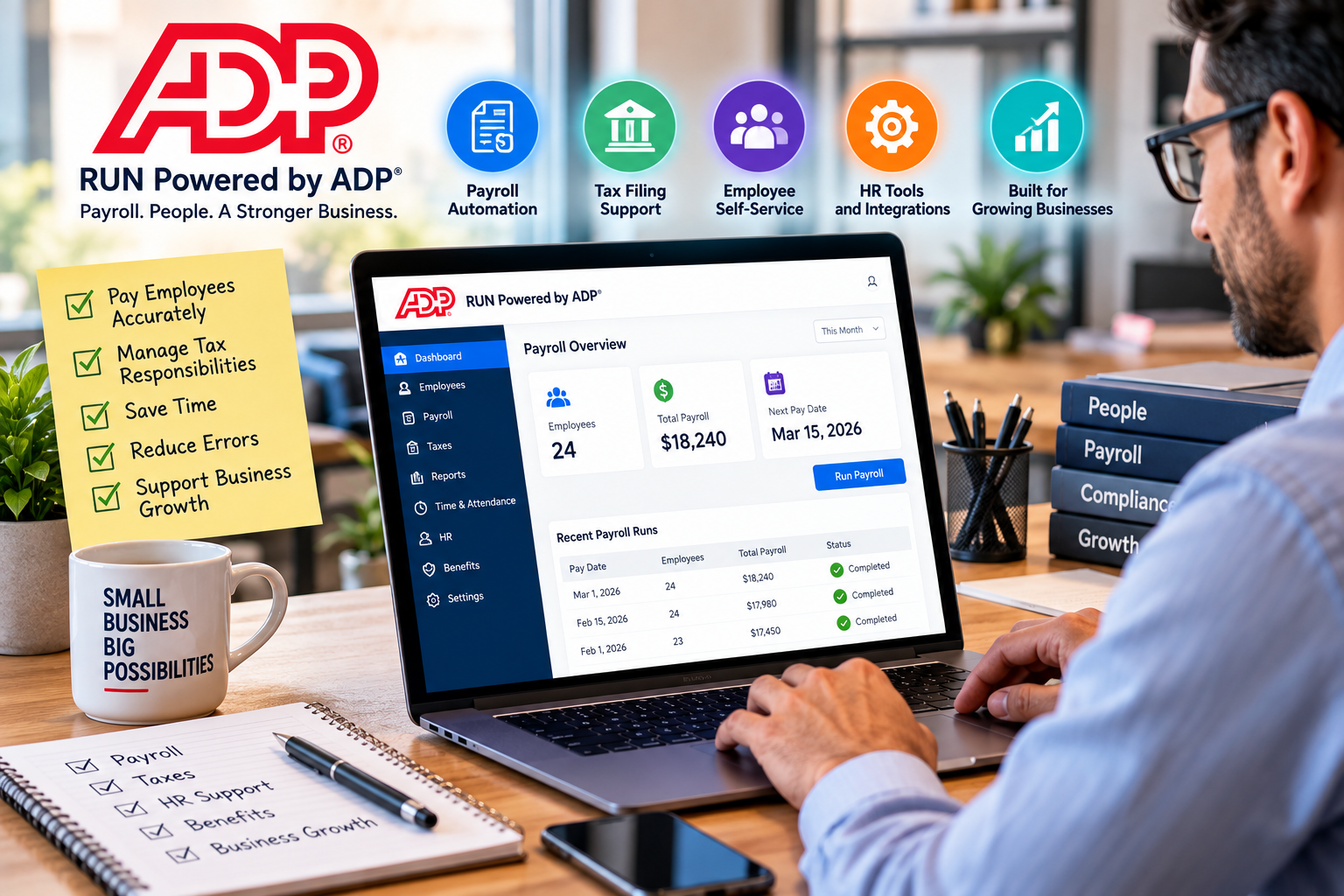
- RUN Powered by ADP® helps small employers process payroll, manage tax-related tasks, and provide employees with access to payroll information.
- ADP may be especially useful for growing businesses, multistate employers, and owners who want professional payroll or HR support available when questions arise.
- Employers should confirm the features, filing coverage, optional services, and support included with the specific ADP package they choose.
Choosing payroll software is about more than finding the lowest monthly price. Small employers need a system that helps them pay people accurately, manage tax responsibilities, answer employee questions, and keep pace as the business changes. For employers evaluating their options, a side-by-side look at payroll software for small employers can help clarify which features deserve the closest attention.
ADP is a strong starting point for businesses that want payroll automation, tax filing support, employee self-service, and access to additional HR tools as needed. RUN Powered by ADP® is designed for small businesses, with services and available features that can be matched to the employer’s payroll complexity, workforce size, and support requirements.
Why ADP Is a Strong Starting Point for Payroll Comparisons
Small employers often have to oversee payroll without a dedicated payroll department. That makes a dependable process important. A payroll platform should calculate wages and deductions, support on-time employee payments, organize records, and reduce repetitive administrative work.
ADP’s small-business payroll services offer a practical framework for comparing providers. Instead of focusing solely on an advertised starting price, employers can assess whether a platform offers automated payroll processing, tax support, guided setup, employee self-service, responsive support, and options to support future growth.
Payroll Problems ADP Can Help Small Employers Address
Manual payroll can create avoidable pressure for an owner or office manager. Spreadsheets, paper time records, last-minute pay changes, and employee questions can consume time that would otherwise be devoted to customers and operations.
- Wage and deduction calculations: Automated payroll processing can reduce the need to calculate every payment manually.
- Tax administration: ADP offers payroll tax calculation, filing, and payment services, subject to the employer’s selected service and applicable requirements.
- Employee pay questions: Employee self-service tools can give workers access to pay-related information without requiring the owner to handle every request.
- Payroll corrections: Review tools and support processes can help employers identify and address issues when changes are needed.
- Scattered workforce tasks: Optional services can extend beyond payroll to include HR, time tracking, benefits, and workforce management.
How to Compare ADP With the Features Your Business Needs
A useful payroll comparison begins with the work your business must complete every pay period. Consider the following questions when reviewing ADP or any other provider.
- Payroll automation: Can the system calculate regular pay, deductions, and taxes with limited manual entry?
- Tax support: Does the selected service support the federal, state, and local tax activities relevant to your business?
- Onboarding: Will the provider help organize company information, employee records, and prior payroll data before the first run?
- Employee access: Can employees securely view pay statements and other available information on their own?
- Growth readiness: Can the platform accommodate more employees, additional locations, or new HR needs in the future?
- Human support: Is payroll or HR guidance available when an issue is too complex to resolve with a self-service answer?
RUN Powered by ADP® can be appealing because it combines core payroll functionality with optional tools and support. Feature availability varies by package, so businesses should compare using the services they expect to use, rather than assuming every option is included by default.
Why Compliance Matters More Than a Low Starting Price
Payroll carries real administrative responsibilities. Employers may need to withhold taxes, make deposits, file returns, maintain records, and prepare year-end wage statements. The federal employment tax responsibilities for employers include requirements involving federal income tax withholding, Social Security and Medicare taxes, and federal unemployment tax.
Payroll software can streamline calculations and filing workflows, but it does not remove the employer’s responsibility to supply accurate information and review payroll before it is processed. Businesses with tipped workers, employees in multiple states, changing pay rates, or unusual deduction rules may require more configuration and closer support than a simple payroll setup.
What Makes RUN Powered by ADP® Useful for Small Employers?
RUN Powered by ADP® is ADP’s small-business payroll platform. It can support routine payroll runs, direct deposit options, payroll reporting, employee changes, off-cycle payments, bonuses, and year-end payroll activities. Mobile access and employee self-service can make payroll information easier to access for both owners and workers.
For a business that is expanding, the ability to add related services can be as important as processing the next paycheck. ADP offers options that can help employers connect payroll with HR support, time and attendance processes, benefits administration, and integrations. This approach may help reduce the disruption of changing providers as business needs become more complex.
The Broader Importance of Reliable Small-Business Payroll
Dependable payroll supports employee trust, cash flow planning, tax reporting, and day-to-day continuity. It also matters at a national scale. As of February 2026, small businesses employ 62.3 million people and pay 38.7% of private-sector payroll, according to the U.S. Small Business Administration’s Office of Advocacy.
For an individual employer, payroll is personal and immediate. Employees expect to be paid correctly and on time. Owners need dependable records and a clear understanding of payroll costs. A platform that centralizes payroll activity and provides access to support can make those responsibilities more manageable.
How to Assess ADP’s Value Instead of Price Alone
- List the payroll tasks currently completed by hand and estimate the time they require.
- Identify every tax filing, payment, report, and year-end form your business must manage.
- Consider the operational cost of payroll errors, late corrections, and repeated employee requests.
- Review which HR, time, attendance, or benefits tools would be useful now or later.
- Ask how pricing and available services change as employee count, locations, or payroll complexity increase.
- Confirm the support channels and tax filing services included with the chosen package.
Which Small Employers May Be a Good Fit for ADP?
ADP may be a particularly good fit for new employers, businesses moving away from manual payroll, multistate employers, and growing companies that want payroll and HR capabilities in one connected environment. It can also suit owners who value employee self-service and prefer access to knowledgeable support when payroll questions arise.
When a Different Approach May Make Sense
A sole proprietor with no employees generally does not need a full employee payroll platform. Likewise, a company with only a few workers and a highly predictable payroll may decide that a simpler service meets its needs. The right choice depends on current requirements and the likelihood that those requirements will change.
Questions to Ask Before Choosing an ADP Payroll Package
- Which package fits the current workforce and payroll schedule?
- Which federal, state, and local tax services are included?
- What setup and payroll migration support is available?
- How are payroll corrections handled?
- Which employee self-service tools are included?
- Can the service support multiple states, locations, or pay types?
- Which HR, benefits, time, and integration options can be added later?
- How will costs change as the business grows?
Conclusion
The best payroll software is the one that meets today’s needs without creating unnecessary work tomorrow. ADP gives small employers a structured option for managing payroll, tax-related responsibilities, employee access, and connected HR needs through RUN Powered by ADP®. By comparing total value, support, compliance capabilities, and growth potential, employers can make a more confident payroll decision in 2026.
