
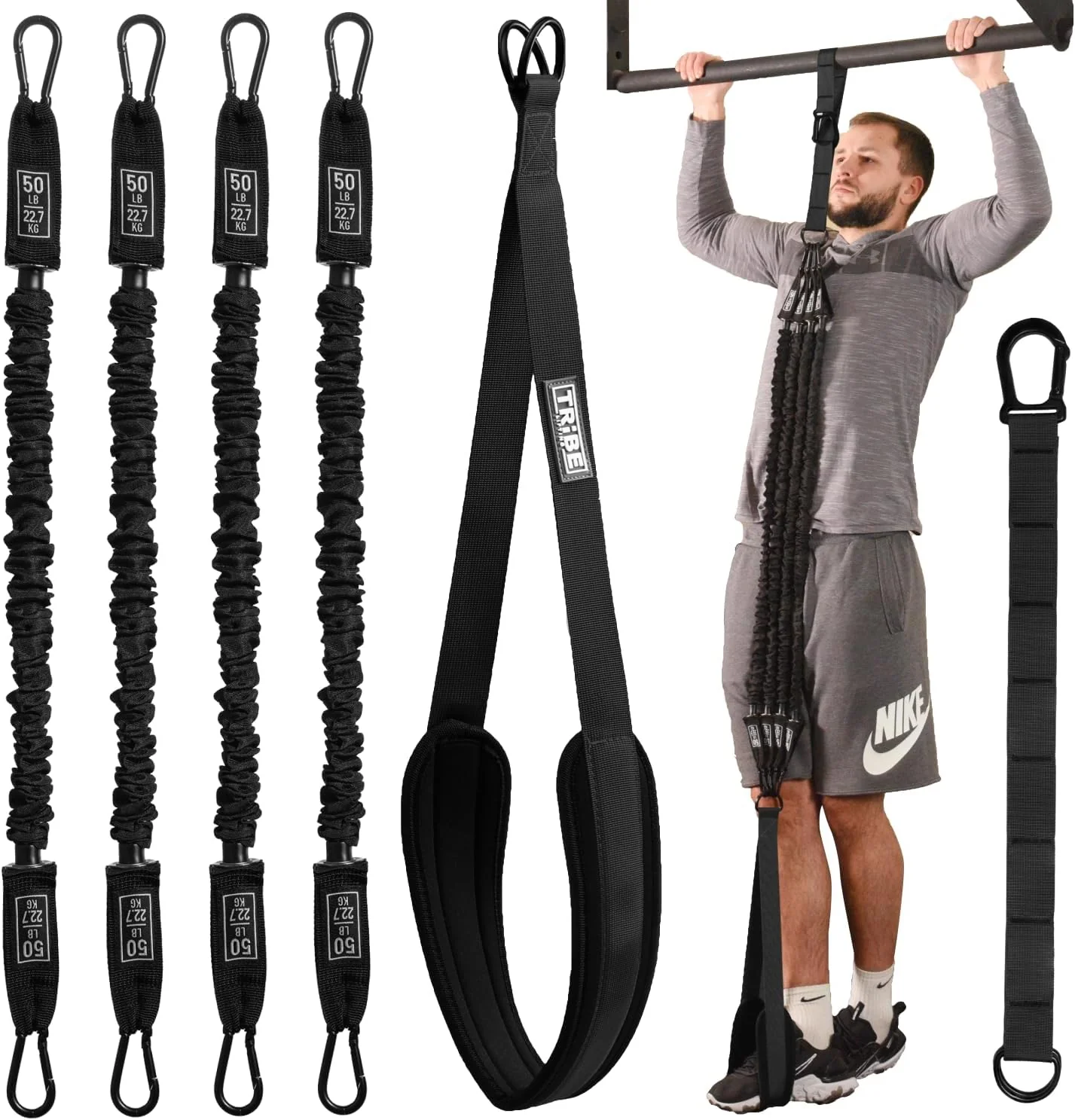
When it comes to training pull-ups, many beginners and even intermediate lifters struggle with performing full repetitions unassisted. Fortunately, there are two popular tools that make pull-ups more accessible: pull-up resistance bands and assisted pull-up machines. Both help reduce the difficulty of the exercise, but they each have unique strengths and weaknesses. In this article, we’ll compare the two to help you decide which is better for your fitness goals.
What Are Pull-Up Assist Bands?
Pull-up assist bands are elastic, looped bands made from durable rubber or latex. They attach to a pull-up bar and provide upward support as you perform the movement. Depending on the thickness of the band, they can offer varying levels of assistance — thicker bands provide more help, while thinner bands offer less.
One distinct advantage of these bands is their portability. You can take them anywhere, whether you’re at home, in a gym, or traveling.
What Is an Assisted Pull-Up Machine?
An assisted pull-up machine is a piece of gym equipment designed to help users perform pull-ups with adjustable counterweight assistance. Instead of using elastic resistance, a weight stack offsets part of your body weight. You place your knees or feet on a platform connected to the machine, and as you pull up, the machine helps lift some of your weight.
These machines are common in commercial gyms and often include options for chin-ups and other variations.
Portability and Accessibility
When comparing pull-up resistance bands to assisted pull-up machines, portability is a clear win for the bands. Bands are lightweight, inexpensive, and easy to store. You can use them at home, outdoors, or virtually anywhere you have a sturdy pull-up bar.
In contrast, assisted pull-up machines are large, heavy, and fixed in place. You need access to a gym that has one, and your workout depends on the machine’s availability.
Adjustability and Progression
Assisted pull-up machines often offer precise weight adjustments. This makes it easy to fine-tune the amount of support you need as you get stronger. For beginners who want incremental changes, this can be very beneficial.
Pull-up assist bands provide progress too, but in a less exact way. You switch between bands of different thickness to increase or decrease assistance. As resistance changes, the band stretches differently throughout the movement — a concept known as pull up resist. While effective, it may not feel as smooth or controlled as the weight-based adjustments on a machine.
Muscle Engagement and Technique
One of the keys to mastering pull-ups is proper muscle engagement and technique. Some trainers argue that pull up resist bands challenge stabilizing muscles more effectively because the resistance varies through the range of motion — offering more help at the bottom and less at the top. This variable resistance can promote muscle activation in ways similar to free-bodyweight training.
Assisted pull-up machines, on the other hand, offer a consistent level of support. This can be helpful for maintaining strict form, especially for total beginners who need foundational strength.
Cost and Convenience
Cost is another area where pull-up assist bands shine. They are significantly cheaper than gym memberships or assisted machines. A set of bands can cost a fraction of what you’d pay for regular access to a gym or specialized equipment.
Assisted pull-up machines represent a big investment for any gym and require space and maintenance. For most individuals training at home, bands are a far more affordable way to practice pull-ups.
Which Is Better?
So, which is better — pull-up resistance bands or assisted pull-up machines? The answer depends on your needs:
-
If you want portability, affordability, and versatility, pull-up assist bands are an excellent choice.
-
If you prefer precise load adjustments and controlled machine-assisted movement, an assisted pull-up machine may suit you better.
Ultimately, both tools can help you progress toward unassisted pull-ups. Many fitness enthusiasts benefit from using both — bands for warm-ups, home workouts, or travel, and machines for structured gym sessions.
Choosing the right tool comes down to your goals, budget, and training environment. Whichever you pick, consistent practice and proper form will get you closer to mastering the pull-up.
