

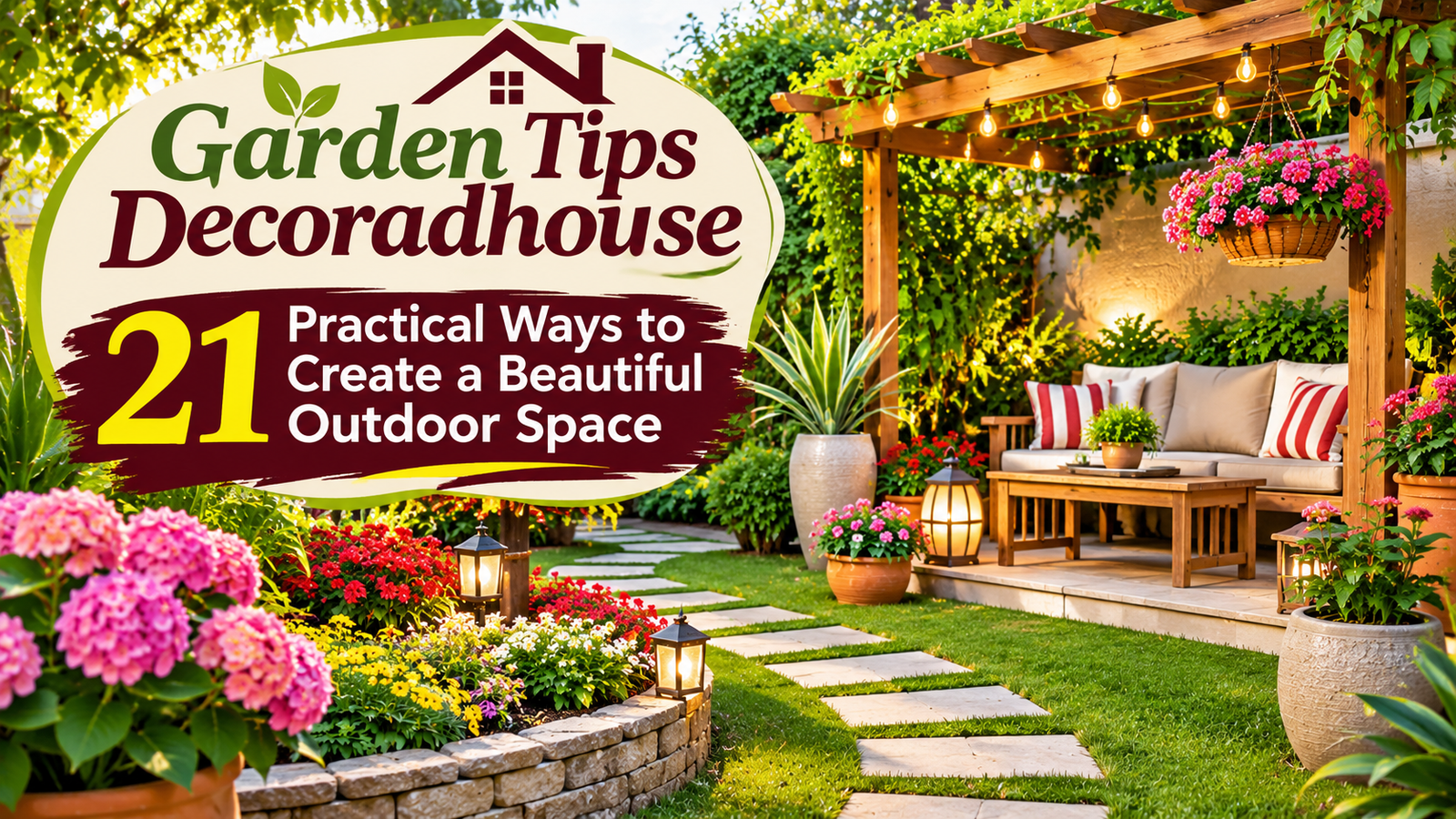
A garden does not need a huge lawn, expensive landscaping, or a professional designer to feel welcoming. With a little planning, regular care, and creative use of what you already have, even a small patio, balcony, or narrow backyard can become a relaxing green space. These garden tips decoradhouse ideas focus on practical improvements that are easy to understand and adapt to different homes, budgets, and climates.
Whether you are starting with empty soil or refreshing an established garden, begin by noticing how sunlight moves through your space, where water collects, and which areas you naturally use. A thoughtful layout makes gardening easier and helps plants thrive. The goal behind garden tips decoradhouse is to create an outdoor area that looks good while remaining manageable in everyday life.
1. Start With a Simple Garden Plan — garden tips decoradhouse
Before buying plants or decorations, sketch your outdoor area. Mark doors, paths, walls, existing trees, sunny spots, shaded corners, and water access. Planning first can prevent crowded planting and costly changes later. Keep frequently used areas open and place garden beds where you can reach them comfortably.
A basic plan is one of the most useful garden tips decoradhouse beginners can follow because it gives every plant and feature a purpose. Think about how you want to use the space: relaxing, growing vegetables, entertaining guests, or creating a play area. A garden that suits your routine is more likely to stay cared for.
2. Understand Sunlight Before Choosing Plants — garden tips decoradhouse
Observe your garden at different times of the day. Some locations receive several hours of direct sunlight, while others remain bright but shaded. This matters because plants have different light requirements. Vegetables such as tomatoes usually need plenty of sun, while many foliage plants can tolerate partial shade.
Use these garden tips decoradhouse observations to group plants according to their light needs rather than forcing them into unsuitable locations. If a plant repeatedly struggles, check its light exposure before assuming it needs more fertilizer or water.
3. Improve Soil Gradually — garden tips decoradhouse
Healthy soil supports stronger roots, better water retention, and more reliable growth. If your soil is compacted, loosen it gently and add suitable organic matter such as finished compost. Avoid digging deeply around established roots, and consider testing soil before making major changes.
Among garden tips decoradhouse essentials, improving soil is a long-term investment. Add compost in modest amounts, observe how the soil responds, and avoid applying products without understanding what your garden actually needs. Soil improvement is usually more effective when done consistently rather than all at once.
4. Choose Plants That Fit Your Climate — garden tips decoradhouse
Look for plants suited to your local temperatures, rainfall, and seasonal conditions. Native or locally adapted plants can often require less maintenance once established. Ask a nearby nursery about varieties that perform well in your area and check mature plant sizes before purchasing.
These garden tips decoradhouse recommendations can help you avoid selecting plants only because they look attractive in a shop. A plant that fits your climate and space will usually be easier to maintain, healthier over time, and less likely to need constant replacement.
Read more: Etherions Faston Crypto: 12 Essential Insights Into Blockchain, Features, Risks, and Research
5. Layer Plants for a Natural Look — garden tips decoradhouse
A garden can feel fuller and more balanced when plants are arranged at different heights. Place taller shrubs or ornamental grasses toward the back, medium-height plants in the middle, and low-growing flowers or groundcovers near the front. In containers, combine a taller focal plant, a compact filler, and a trailing variety if their care requirements match.
Use garden tips decoradhouse layering to create depth without overcrowding. Leave enough room for plants to reach their mature width, and remember that an attractive planting arrangement should still allow air circulation and easy access for maintenance.
6. Use Containers to Add Flexible Color — garden tips decoradhouse
Pots are useful when soil is poor, space is limited, or you want to move plants as seasons change. Choose containers with drainage holes and use potting mix appropriate for the plants. Larger pots generally dry out more slowly than tiny containers, so they may be easier to manage during hot weather.
One flexible idea from garden tips decoradhouse is to group containers in odd numbers and vary their heights. Keep the colors of pots coordinated, or use one standout pot as an accent. You can rearrange the display without rebuilding the garden.
7. Make a Small Garden Feel Spacious
Small gardens benefit from clear pathways, fewer competing focal points, and vertical planting. Use trellises, wall-mounted planters, or shelves to grow upward. Keep the center or main walkway relatively open, and choose furniture scaled to the space.
Apply garden tips decoradhouse principles by repeating a few plant varieties rather than using too many different types. Repetition creates a calm visual rhythm, while a consistent palette of two or three colors can make a compact space look intentional and uncluttered.
8. Add a Comfortable Seating Corner
A garden becomes more useful when it offers a place to sit. A simple bench, two weather-resistant chairs, or a small café table can create a comfortable destination. Position seating where you can enjoy a view, shade, or morning light, depending on your preferences.
For garden tips decoradhouse styling, add a cushion in a durable outdoor fabric, a side table, or a lantern. Keep accessories limited so they do not become clutter, and make sure furniture is stable and appropriate for outdoor conditions.
9. Water Plants More Thoughtfully
Watering needs vary by plant, soil, pot size, temperature, and weather. Instead of following a rigid daily schedule, check the soil moisture near the roots. Water deeply when appropriate, then allow the soil to drain. Avoid leaving containers sitting in standing water unless the plant specifically requires it.
Good garden tips decoradhouse routines encourage watering early in the day when practical, which can reduce evaporation and give foliage time to dry. Use a watering can, hose nozzle, or drip system that delivers water close to the soil rather than spraying everything unnecessarily.
10. Mulch to Protect the Soil
A suitable layer of mulch can help conserve moisture, reduce weeds, and protect soil from temperature swings. Organic mulches such as shredded leaves or bark gradually break down, while other mulch types may serve different purposes. Keep mulch away from direct contact with plant stems and tree trunks.
This garden tips decoradhouse method can reduce the time spent on routine garden chores. Choose mulch based on your plants and local conditions, and refresh it when needed rather than piling up excessive layers.
11. Create a Simple Color Palette
Color can make a garden feel coordinated. Select a main color, one supporting color, and a neutral green backdrop. For a peaceful look, try white flowers with soft pinks or purples. For a lively space, mix warm colors such as orange and yellow while keeping the arrangement balanced.
Use garden tips decoradhouse color planning to avoid purchasing plants that look attractive individually but clash when placed together. Seasonal flowers can change the palette throughout the year, while evergreen foliage provides continuity between blooms.
12. Reuse Everyday Items Carefully
Old wooden crates, baskets, ceramic bowls, and sturdy household objects may be repurposed as decorative accents, provided they are safe for outdoor use and suitable for plants. If you use an item as a planter, make sure excess water can escape and that the material will not leach harmful substances.
Creative garden tips decoradhouse projects can make a garden feel personal without a large budget. Clean reused items, secure them against wind, and avoid placing fragile objects where people may trip or where pets could knock them over.
13. Add Lighting for Evening Enjoyment
Outdoor lighting can make paths easier to see and create a welcoming atmosphere. Consider low-voltage or solar lights along walkways, a gentle light near seating, or a spotlight on a tree or feature. Avoid excessive brightness that shines into neighboring homes or disrupts wildlife.
These garden tips decoradhouse ideas work best when lighting is used selectively. Aim for a few purposeful points of light rather than illuminating every corner. Choose outdoor-rated products and follow installation instructions, especially for electrical fixtures.
14. Make Paths Practical and Attractive
Paths help people move through the garden without stepping on soil or plants. Materials may include stepping stones, gravel, pavers, or compacted surfaces, depending on drainage and use. Keep the path wide enough for comfortable movement and avoid slippery materials in wet areas.
A practical pathway is a key part of garden tips decoradhouse design because it connects different zones and makes the garden feel organized. Use a gentle curve only where it makes sense, and keep edges tidy so the route remains easy to follow.
15. Grow Herbs Near the Kitchen
Herbs such as mint, basil, parsley, rosemary, and coriander can be useful and decorative. Choose varieties suited to your local climate and provide appropriate sunlight, soil, and watering. Some herbs spread aggressively, so growing them in separate pots can make them easier to control.
Garden tips decoradhouse edible planting can bring everyday convenience to your outdoor space. Place frequently used herbs where they are easy to harvest, label containers if needed, and remove damaged leaves regularly to keep plants tidy.
16. Encourage Helpful Garden Wildlife
A healthy garden can support pollinators and other beneficial wildlife. Plant flowers with varied bloom times, provide shallow water with safe landing spots, and avoid unnecessary pesticide use. Leave a small natural area if space allows, and choose plants that offer nectar, pollen, or shelter.
Following garden tips decoradhouse wildlife-friendly practices can make your garden more lively and resilient. Research local species and avoid introducing plants that may become invasive in your region.
17. Keep Maintenance Manageable
A garden that requires hours of upkeep every week may become frustrating. Choose a manageable number of plants, group those with similar needs, and make a short routine for watering, pruning, removing weeds, and checking for pests. Small, regular tasks are easier than letting everything build up.
Practical garden tips decoradhouse planning means designing for the time you actually have. If you are busy, use durable plants, mulch, containers with adequate volume, and simple layouts. You can always add new features later.
18. Notice Problems Early
Check leaves, stems, and soil regularly. Yellowing leaves, wilting, spots, or slow growth can have several causes, including watering issues, pests, poor drainage, or light conditions. Inspect plants before treating them and identify the problem as accurately as possible.
These garden tips decoradhouse habits can prevent small issues from spreading. Remove clearly damaged plant material when appropriate, clean tools, and seek reliable local advice if a problem is unfamiliar or severe. Avoid treating every garden insect as harmful because many are beneficial.
19. Refresh the Garden With Seasonal Changes
Rather than redesigning everything, make small seasonal updates. Replace tired annuals, trim plants at the correct time, refresh containers, and adjust seating or shade accessories as weather changes. Keep a simple note of what worked well during each season.
Garden tips decoradhouse seasonal refreshes are easier when you plan a few changes at a time. A new pot, a different flower color, or a tidy border can make the space feel fresh without a large expense or major disruption.
20. Add One Focal Point
A focal point gives the eye somewhere to rest. It could be a sculptural pot, a small tree, a water feature, a colorful planter, or a distinctive bench. Place it where it can be seen naturally from a doorway, seating area, or main path.
Use garden tips decoradhouse styling to keep the focal point proportional to the space. In a small garden, one clear feature is often more effective than several competing decorations. Surround it with simpler plants so it stands out.
21. Keep a Garden Journal
Write down plant names, planting dates, watering changes, seasonal observations, and successes or failures. A few notes can help you remember which areas receive too much sun, which plants thrive, and when certain tasks should be done next year.
A journal makes garden tips decoradhouse ideas easier to improve over time because your decisions are based on observations rather than memory alone. Take occasional photos from the same viewpoint to track growth and notice changes.
Read more: Kodak’s new Ektra smartphone would rather just be a camera
Helpful Resources for Further Gardening Advice
For trustworthy information about plant care, soil, pests, and garden planning, consult established gardening resources. Recommendations may vary by climate, so use local guidance when selecting plants or treating problems.
- Royal Horticultural Society – Gardening Advice
- University of Minnesota Extension – Gardening Resources
- USDA – Official Website
Frequently Asked Questions
How can I make a garden look good on a small budget?
Start by cleaning and organizing the space, improving the soil, and using a consistent plant palette. Propagate plants where suitable, reuse safe containers, and make one improvement at a time. garden tips decoradhouse ideas can be adapted using affordable materials instead of buying everything new.
Which plants are easiest for beginners?
The best beginner plants depend on local climate and light. Ask a local nursery for hardy, low-maintenance varieties and begin with a small number. Learn their watering needs before expanding. The most reliable garden tips decoradhouse approach is to choose plants that naturally suit your conditions.
How often should I water my garden?
There is no single schedule for every garden. Check soil moisture and consider rainfall, heat, plant type, container size, and drainage. Water when the plants and soil need it, rather than automatically every day. garden tips decoradhouse watering advice should be adjusted to your actual conditions.
What is the best way to decorate a garden?
Use a few coordinated features such as planters, seating, lighting, and a focal point. Leave enough open space for plants to grow and for people to move comfortably. garden tips decoradhouse decor works best when it supports the garden instead of overwhelming it.
How do I keep gardening from becoming too much work?
Choose plants with similar care needs, mulch suitable beds, use containers of practical sizes, and create a short weekly routine. Start small and expand gradually. garden tips decoradhouse planning should match your time, energy, and available space.
Final Thoughts
A welcoming garden is built through small, consistent decisions—not through a single expensive makeover. Plan the space, understand sunlight, improve soil, select suitable plants, and create a few useful areas for relaxing or growing food. Add decorative details only after the basic layout works well.
Use garden tips decoradhouse ideas as inspiration, then adjust each one to your home’s conditions and your own taste. Keep experimenting, record what succeeds, and let the garden develop naturally. With patience and regular care, an ordinary outdoor space can become a beautiful, practical place to enjoy throughout the year.