
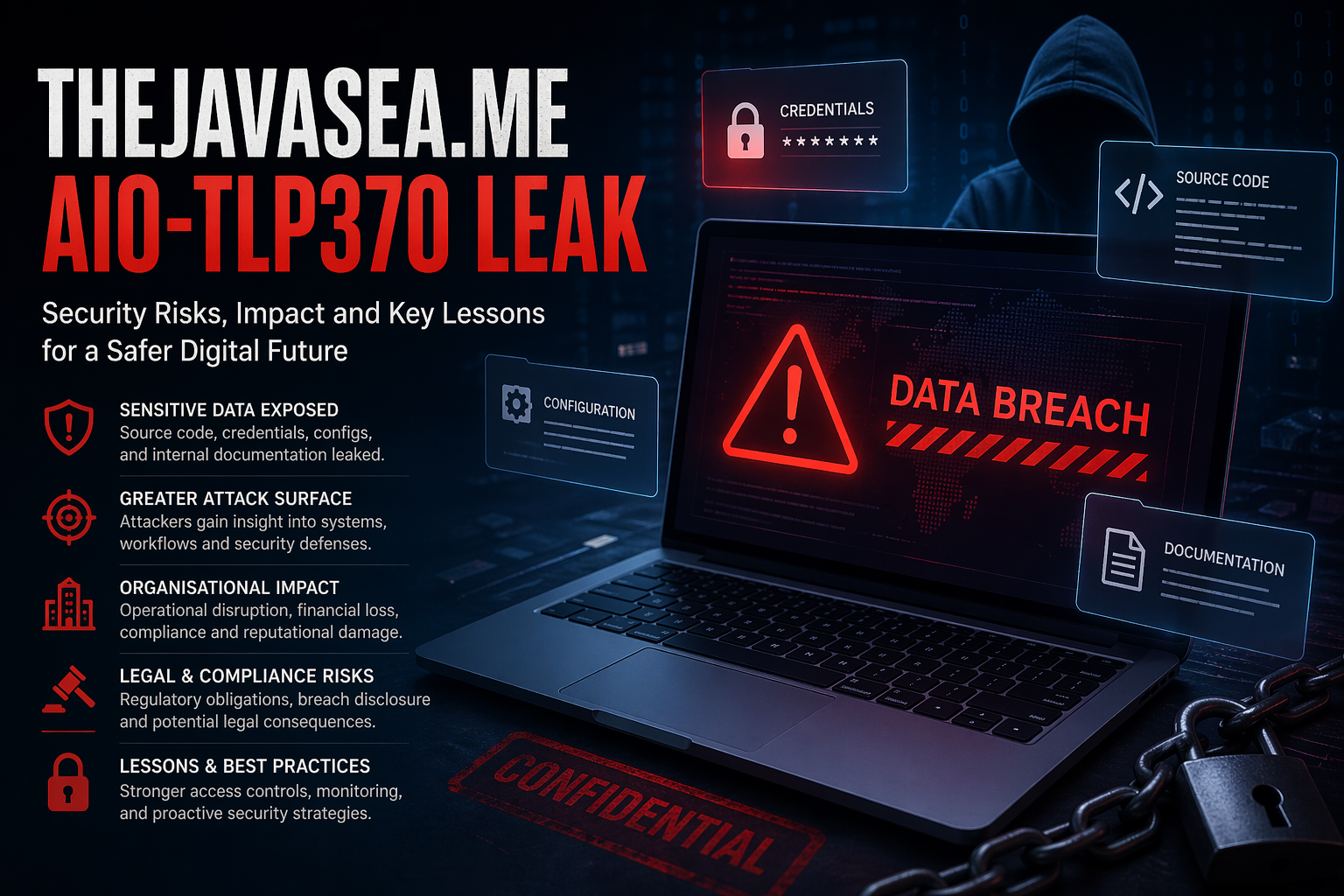
The exposure of AIO-TLP370 linked to TheJavaSea.me has become a serious concern across cybersecurity and enterprise IT environments. This incident goes beyond a typical data breach, highlighting deeper weaknesses in how organisations store, manage, and secure sensitive internal systems.
As reliance on automation tools and integrated platforms continues to grow, leaks of this nature reveal how vulnerable modern infrastructures can be when proper safeguards are not in place.
Understanding the AIO-TLP370 Leak
The leaked dataset reportedly contains internal system files, source code, configuration data, credentials, and operational documentation. This kind of exposure is especially dangerous because it reveals how systems function internally, not just the data they hold.
With access to such detailed information, attackers can understand authentication mechanisms, system logic, and architectural design. This allows them to move from random attacks to highly targeted strategies, significantly increasing the chances of success.
Core Security Risks
One of the most critical risks is the exposure of credentials such as API keys and access tokens. These can provide direct or indirect entry into systems, especially if they are still active or reused across environments.
The exposure of source code is equally concerning. When attackers can review proprietary code, they can identify vulnerabilities, logic flaws, and weak points that were not previously visible. This makes exploitation faster and more precise.
Another major issue is the leakage of operational intelligence. Internal documentation and workflows can reveal how organisations detect and respond to threats. This knowledge allows attackers to adjust their behaviour to avoid detection or disrupt response efforts.
Organisational and Ecosystem Impact
The impact of the AIO-TLP370 leak extends beyond a single entity. Many organisations operate within interconnected systems, sharing tools, libraries, and configurations. As a result, even those not directly affected may face increased exposure.
From a business standpoint, such incidents can lead to operational disruption, financial loss, and regulatory pressure. However, the most lasting damage is often reputational. Trust, once lost, is difficult to rebuild, and stakeholders may become more cautious in future engagements.
Legal and Governance Considerations
Modern regulations require organisations to maintain strong data protection practices and accountability. A leak involving internal systems raises serious concerns about compliance, access control, and governance structures.
Organisations may be obligated to report such incidents, notify affected parties, and demonstrate corrective measures. Failure to respond appropriately can result in legal consequences and further damage to credibility.
Lessons Learned
This incident highlights the risks of centralised and poorly controlled access to sensitive data. It also emphasises the importance of proper credential management, including avoiding static or hard-coded secrets.
Another key lesson is the need for proactive security strategies. Organisations should assume that breaches are possible and build systems that remain secure even under exposure. The role of third-party and supply chain security is also critical, as vulnerabilities can originate outside the organisation.
Strategic Outlook
The AIO-TLP370 leak reflects a broader shift in cybersecurity threats. Attackers are increasingly focusing on internal systems, development environments, and operational tools because they provide deeper access and greater control.
To respond effectively, organisations must move beyond traditional perimeter-based security and focus on protecting internal infrastructure. Continuous monitoring, adaptive security models, and strong governance are essential for long-term resilience.
Conclusion
The TheJavaSea.me AIO-TLP370 leak serves as a clear warning about the evolving nature of digital security risks. It demonstrates how a single exposure can have widespread consequences across interconnected systems.
Organisations that take proactive steps to strengthen their security posture will be better prepared to face future threats, while those that fail to adapt risk facing similar incidents with even greater impact.
